
Free Resources · Free information guide
After a Difficult Shift
A practical guide to support after a death, distressing incident or emotionally demanding day.
Supportive information, not diagnosis or therapy. Urgent mental health routes described below are for England; other UK nations have their own services.
Before you leave
Make sure any immediate care risk has been escalated and necessary handover and incident reporting are complete. Tell the responsible person if distress or exhaustion affects your ability to finish safely. If you do not feel safe to drive, pause and arrange help with transport. Do not leave an ongoing danger unreported because you are desperate to get home.
Give yourself a manageable next step
You might want quiet, food, water, rest or company. Choose something simple that feels helpful. You do not have to explain the whole event immediately or react in the same way as colleagues. Avoid treating alcohol or other substances as the way to cope. If symptoms are severe, persistent or worrying, seek professional help rather than assuming you should manage alone.
A death can affect staff too
Caring relationships can matter deeply. Sadness after a person's death is not unprofessional, and people respond differently. Ask about available supervision, bereavement support or an employee assistance programme. Respect the person's and family's privacy when talking outside work. You can describe your feelings without sharing identifying care details.
Choose support, not forced disclosure
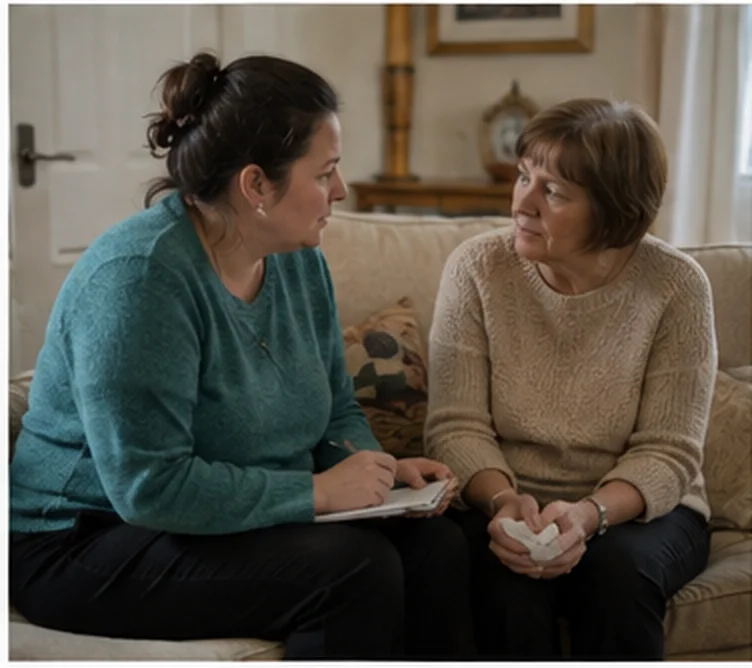
A private check-in can focus on what you need now, what practical help is available and when to check back. You should not be pressured to recount distressing details to prove you were affected. A manager may still need factual information for an incident process; that is different from asking you to relive the experience as a wellbeing exercise. Ask for appropriate support with both.
If the effects continue
Notice whether sleep, concentration, relationships or everyday functioning are being affected. Contact your GP or appropriate mental health support if you are struggling. For urgent mental health help in England, use NHS 111 and select the mental health option. If you or another person cannot stay safe or face immediate danger, call 999 or go to A&E. Do not wait for a routine workplace meeting.
Before the next shift
Agree any practical support needed, such as a check-in, supervised return to a difficult task or review of workload. Availability and suitability depend on the circumstances; discuss rather than assume. If the incident exposed a system problem, ask how it will be addressed. Supporting your recovery and improving the service are separate responsibilities, and both deserve attention.
Your next steps
- Have immediate risks and handover needs been addressed?
- Can I travel home safely?
- What would help in the next hour?
- Who can I contact without sharing confidential care details?
- Do I need professional or urgent help?
- What support should be agreed before my next shift?
Sources and further help
Reviewed 6 October 2026. Independently written by Pheon Academy; the linked organisations do not endorse this guide. Contains public sector information licensed under the Open Government Licence v3.0, where applicable.