Free guide · England
When you are worried about someone’s care
Know when to raise a complaint, when to report a safeguarding concern and when to seek urgent help.
Sources checked 2 October 2026 · General information, with links to advice for your circumstances.

Watch the guide
Narration uses an AI-generated voice. The full text is below.
Press play to listen. You can read every part below.
Read at your own pace
Part 1 of 4
Look at safety first
A concern might involve missed care, disrespect, unexplained injuries, pressure about money or someone being left without essentials. You do not need to prove abuse before seeking advice. Call 999 if there is immediate danger or a life-threatening emergency. For a concern about abuse or neglect, contact the council’s adult safeguarding team; report suspected crime to the police. Do not wait for a provider’s complaints process if someone needs protection now.
Your next step: State clearly what is happening now and why you think the person may be at risk.
Read more: NHS: abuse and neglect of adults at risk · NHS: when to call 999 and when to use 111
Part 2 of 4
Listen and record what you know
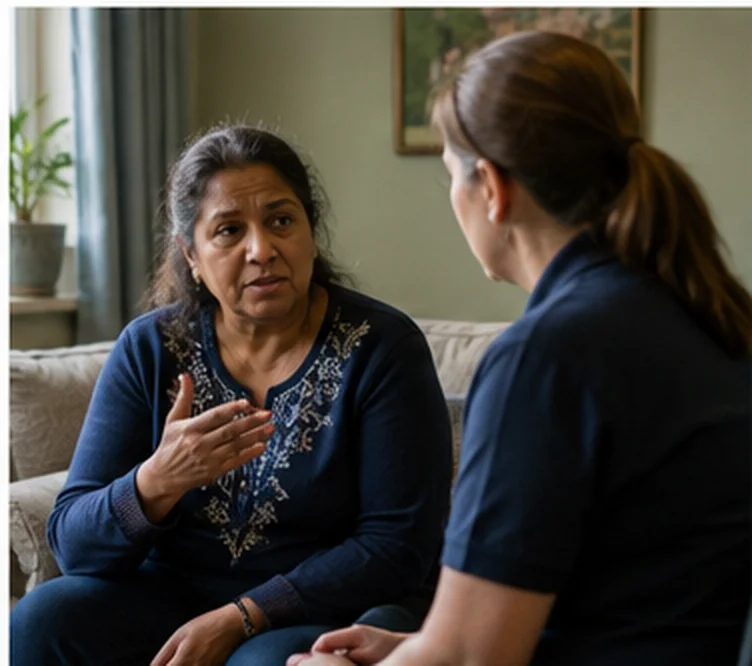
If safe, talk privately with the person and ask what they want to happen. Listen calmly and avoid pressing them for a detailed account. Do not promise absolute secrecy if information may need to be shared to help protect them. Keep factual notes of what you saw or were told, dates and who you contacted. Distinguish their words from your interpretation. Avoid confronting a suspected abuser or doing your own investigation.
Your next step: Keep notes secure and share relevant information with the appropriate service.
Read more: NHS: abuse and neglect of adults at risk

Part 3 of 4
Use the complaints route
For a care-service complaint, ask the provider for its procedure. Explain what happened, the impact and what response you want. Ask for acknowledgement, a response timescale and a named contact. If the council arranged the service, ask whether it should handle or coordinate the complaint. Keep a record of replies. A complaint and safeguarding referral may both be appropriate; they have different purposes.
Your next step: Send a short factual account and keep a copy of what you submit.
Read more: Local Government and Social Care Ombudsman: adult social care complaints

Part 4 of 4
Escalate to the right place
If the social care complaint remains unresolved after the appropriate process, the Local Government and Social Care Ombudsman may be able to consider it, including complaints about privately funded adult care. Check its guidance on eligibility and timing. CQC can use information about poor care in its regulatory work, but does not normally resolve individual complaints. Ask about advocacy if the person needs help to express their concerns.
Your next step: Ask which organisation can provide the remedy you are seeking.
Read more: Local Government and Social Care Ombudsman: adult social care complaints

Your next-steps checklist
Print this page, or choose “Save as PDF” in your print options. Your notes stay with you.
- Is anyone in immediate danger?
- What does the person want to happen?
- Have we recorded facts and dates?
- Does the council safeguarding team or police need to know?
- Who is handling the complaint and by when?
- What is the escalation or advocacy route?
My next step: ____________________________________
Who will help, and when: ____________________________
Sources and further help
Based on the published guidance below. Last checked 2 October 2026. Applies to England. These organisations have not endorsed or approved this Pheon Academy guide.
- NHS: abuse and neglect of adults at risk
- NHS: when to call 999 and when to use 111
- Local Government and Social Care Ombudsman: adult social care complaints
For a decision about your own care, finances or legal documents, use these services to find appropriate individual advice. Official pages carry current fees, eligibility details and contact information.