Free guide · England
Supporting a loved one with dementia
Support everyday communication, recognise changes that need medical help and find support for you both.
Sources checked 2 October 2026 · General information, with links to advice for your circumstances.

Watch the guide
Narration uses an AI-generated voice. The full text is below.
Press play to listen. You can read every part below.
Read at your own pace
Part 1 of 4
Get help with changes you notice
If you are worried about memory or everyday changes, encourage a GP appointment and offer support if wanted. Do not assume every difficulty is dementia or simply ageing. Make a short note of what has changed and when, using examples rather than labels. A diagnosis can help people understand their situation and access support. If the person is reluctant, ask a dementia advice service how to approach the conversation respectfully.
Your next step: Ask what the person has noticed and whether they would like help arranging an appointment.
Read more: NHS: worried someone has dementia?

Part 2 of 4
Make conversations less demanding
Speak calmly, allow time for a reply and try one idea at a time. Offer simple choices without taking over. Notice expressions and gestures, especially when words are difficult. Include the person directly in conversations about their life rather than speaking as though they are not there. If a question causes frustration, pause or rephrase it. Repeatedly testing someone’s memory is unlikely to make an ordinary conversation easier.
Your next step: Try one communication change and notice whether the person seems more comfortable.

Part 3 of 4
Do not dismiss a sudden change
Sudden confusion can have an urgent medical cause, including in someone already living with dementia. NHS advice is to go to A&E or call 999 if someone suddenly becomes confused. Do not assume it is just their dementia getting worse. Stay with them if safe, reassure them and tell the medical team what is different from usual. For gradual concerns, arrange a medical review and describe the pattern you have noticed.
Your next step: Keep a brief description of the person’s usual abilities to help explain a change.
Read more: NHS: sudden confusion
Part 4 of 4
Build support around both of you
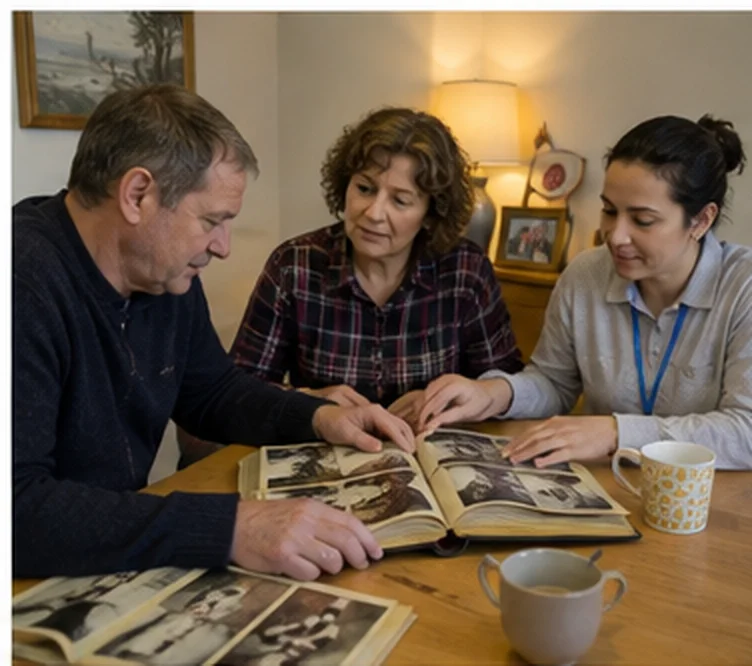
Ask about local dementia support and council care assessments. Plan around the person’s preferences and current abilities, reviewing support as needs change. A dementia diagnosis does not automatically mean someone cannot make decisions; offer support and seek advice where capacity is uncertain. If you are caring regularly, ask for your own carer’s assessment and discuss breaks. You should not have to discover every service alone.
Your next step: Choose one professional or support service to ask about the next useful step.
Read more: NHS: worried someone has dementia? · NHS: the Mental Capacity Act · NHS: carer’s assessments

Your next-steps checklist
Print this page, or choose “Save as PDF” in your print options. Your notes stay with you.
- What has changed, and over what timescale?
- Have medical concerns been discussed with the GP?
- Which communication approaches help?
- Do we know what to do about sudden confusion?
- What matters most to the person each day?
- What support and breaks does the carer need?
My next step: ____________________________________
Who will help, and when: ____________________________
Sources and further help
Based on the published guidance below. Last checked 2 October 2026. Applies to England. These organisations have not endorsed or approved this Pheon Academy guide.
- NHS: worried someone has dementia?
- NHS: communicating with someone with dementia
- NHS: sudden confusion
- NHS: the Mental Capacity Act
- NHS: carer’s assessments
For a decision about your own care, finances or legal documents, use these services to find appropriate individual advice. Official pages carry current fees, eligibility details and contact information.